Could we have such a thing as an African chocolate? What would it taste like?
Two weeks ago, the Eko Chocolate Show in Lagos, Nigeria, brought together chocolate makers, investors, manufacturers, and consumers to dialogue and network toward fostering a cocoa culture in Africa.
I was there with the African Cocoa & Chocolate Expo team, who had been invited to exhibit Ghana-made cocoa products. We packed cocoa husk tea, sun-dried nibs, cocoa powder from diverse brands. We also had craft chocolate bars from Bioko Treats, one of which ended up inspiring this piece.
9th – 10th April were for exhibitions. So each morning, we had our setup on the ground floor of the Silverbird Galleria, Victoria Island. And people came; so many of them.
We showed them the products and encouraged them to taste my favorite cocoa crunches – caramelized brittle of cocoa nibs mixed with ginger, coconut, or peanut. They loved them. They asked questions. Many bought some.
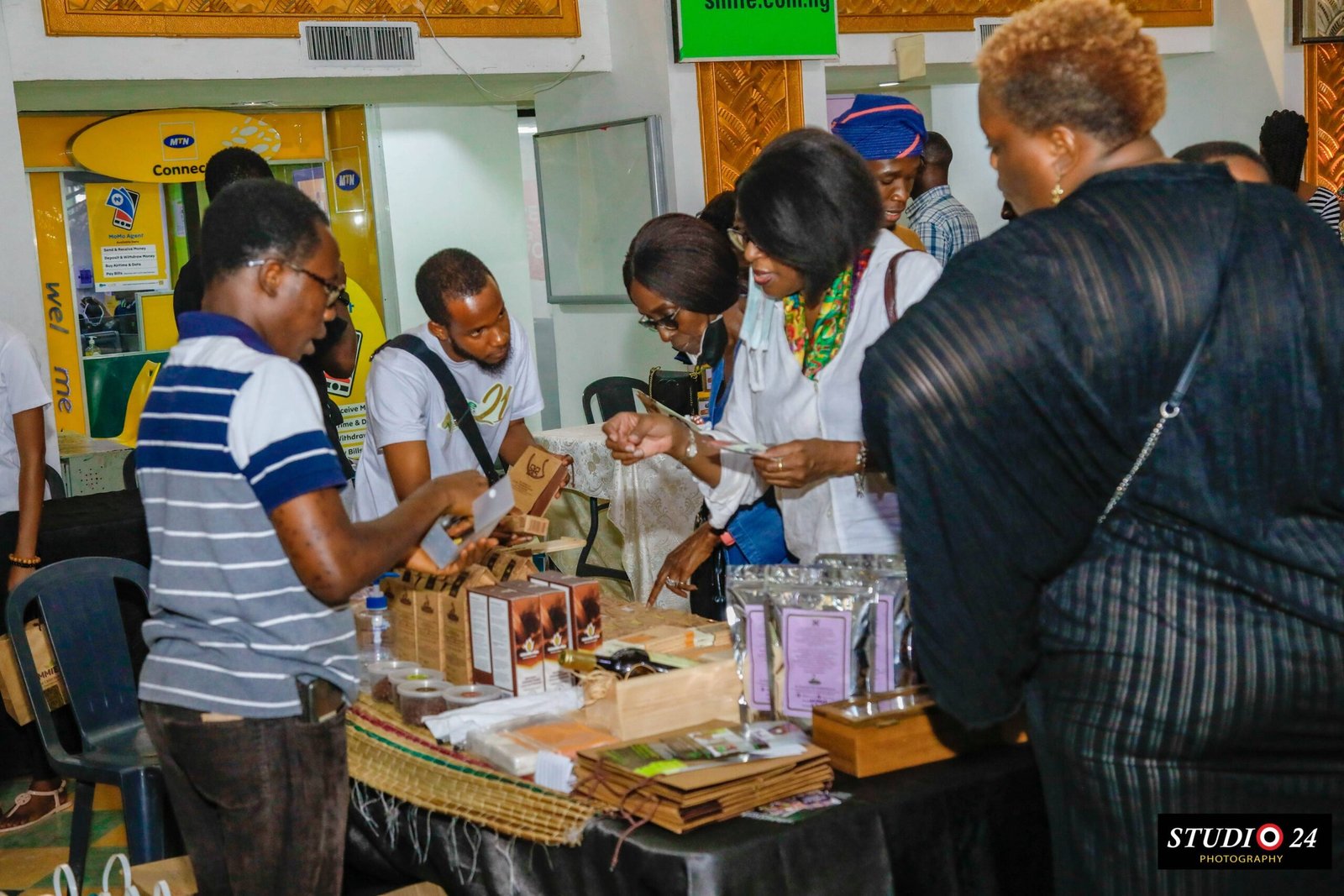
Then we invited them to taste each of the craft chocolate bars from Bioko Treat. And while they loved all four bars, one was always raised eyebrows.
“What?”
“Seriously?”
“Gari Peanut Butter Chocolate?
“So there is actually gari in this?”
Gari is the granular flour obtained by processing the tuberous roots of freshly harvested cassava. It is a staple in Nigeria eaten by millions across all their cultures. But the last place a Nigerian would expect to see gari is in a chocolate bar.
“Would you like to try it?”
“Of course! I’d love to,” one tall dark woman with bright red lipstick replied.
As she placed the sample on her tongue, I watched the familiar sequence unfold once again: her chin lifted slightly as she savored it, a smile appeared, and then came a couple of gentle nods as the familiar gari soakings settled.
“Wow, this is great! I’ll take two of this.”
When the exhibition ended, Bioko’s Gari & Peanut Butter had outsold its Intense Milk and Caramel Crunch siblings.
As I sat in the pickup truck on the long road-trip back, the experience kept coming back to me with questions:
could we have such a thing as an African chocolate? What would it taste like?
This question is crucial at a time when craft chocolate brands are on the rise across the continent. For these businesses to thrive, an increase in local chocolate consumption would be key. But chocolate, by default, does not come from the African food tradition, and as such its integration into our culture merits a close look.
At the Silverbird Galleria, the Nigerian read “gari” before reading “chocolate.” And if that bar outsold the three other (equally priced) bars, I would argue that even before the people tasted it, they saw an ingredient they could relate to, a flavor they could predict, and a story they shared with family, friends, classmates, etc. In fact, that familiarity made them more eager to taste it.
This experience is evidence that yes, we can have an African chocolate. One that carries flavors familiar to the market woman in Lagos, but strange to a Belgian tasting expert. One that evokes stories and lived experiences that would make no sense to the American chocolate lover, but the Ghanaian cocoa farmer would easily relate to.
Bioko Treat’s bar is proof of the excitement and conversations that chocolate, when made for the African, can generate beyond its taste. And this has an implication on the agenda to increase local consumption of cocoa:
If it will succeed, then products like chocolate must be crafted to look, feel, and taste like something that Mansah, my mother, can easily recognize and talk about. Like pepper, like ginger, peanut, gari, or egusi, even alligator pepper.
The alternative is to force or hope for Africans to acquire and desire flavors alien to their food culture. But that seems a steeper hill to climb.
The people of Nigeria didn’t see chocolate before gari. They saw gari, and got curious about how on earth it ended up in chocolate, and what it would taste like? And guess what, many of them couldn’t wait to tell the story to their friends and family at home.
Perhaps the future of African chocolate lies more in giving chocolate an African cultural vocabulary. One flavor, one memory, and one story at a time. Such that even from a distance, one could spot a bar and know it’s Nigerian, Ivorian, Togolese, or Ghanaian.
I can’t wait to taste how up-and-coming chocolate makers on and off the continent respond to this.